

Articles • 15 October 2026
Buy Rate vs Sell Rate: What the Spread Actually Costs You
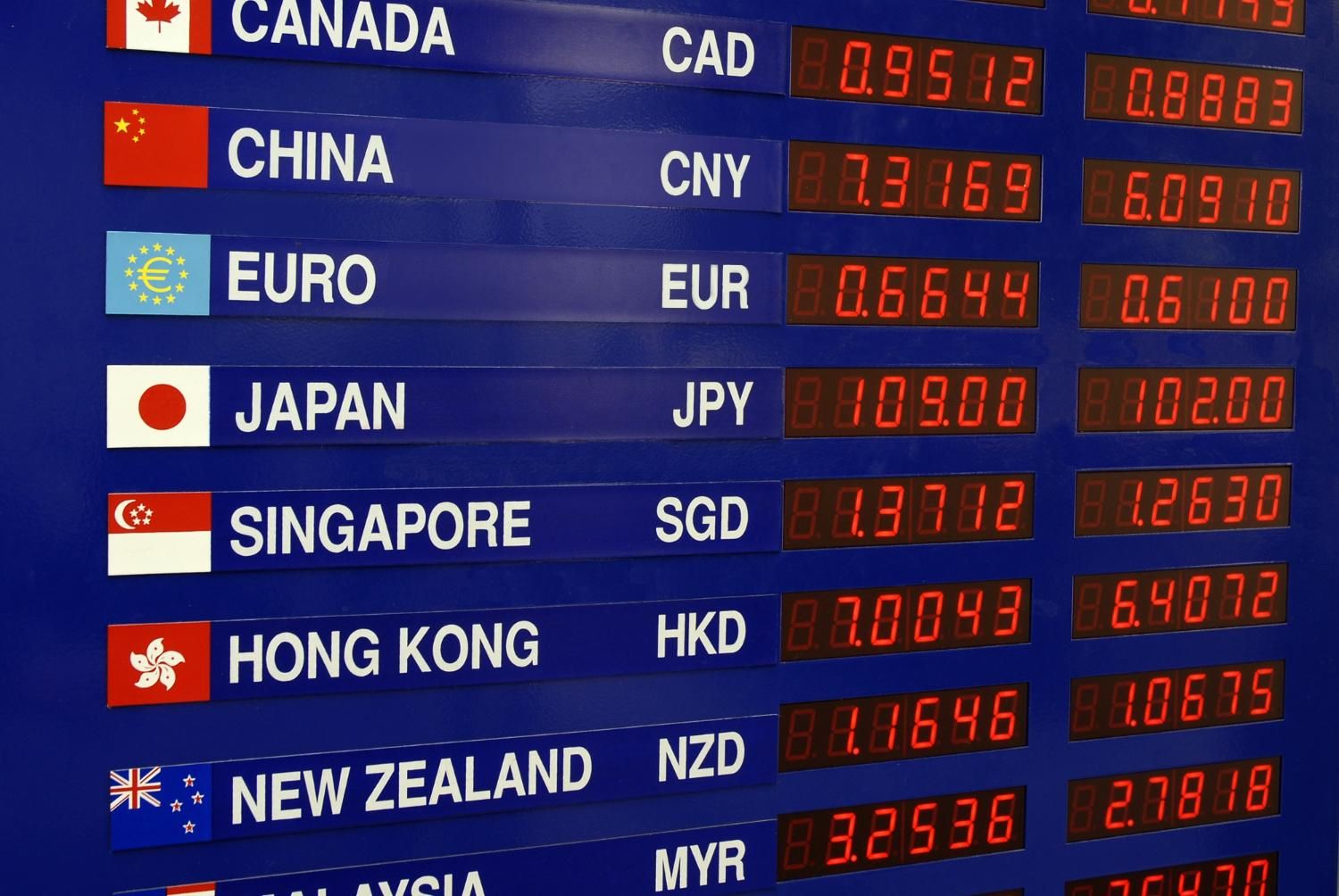
You walk up to a money changer counter with RM5,000, ready to buy US dollars for a trip. The board shows two numbers next to USD, and neither of them matches the rate you saw on Google this morning. So which one is yours, and how much is the gap costing you?
That gap is the spread, and it is the real price of changing money. Once you know how to read the buy rate vs sell rate on a board, you can work out your cost in Ringgit before you hand over a single note.
Key Takeaways
● The "we sell" rate is what you pay when buying foreign currency, and the "we buy" rate is what you get when selling it back.
● The mid-market rate you see on Google is a wholesale reference point, so no retail customer gets it at a counter.
● The spread between the buy and sell rate is the true cost of your exchange, even when a counter advertises zero fees. A one-way exchange costs roughly half the spread, and a round trip costs all of it.
● Spreads differ from one provider to the next, so comparing rates before you exchange can save you real money.
● Checking rates across outlets, asking for larger notes and avoiding unnecessary round trips all help shrink what you lose to the spread.
How to Read a Money Changer Rate Board
The rates on a board are written from the money changer's point of view. "We buy" is the price they pay you for your foreign currency. "We sell" is the price you pay them for foreign currency.
So if you are flying out and need dollars, you look at the "we sell" column. If you just got back with leftover baht, you look at the "we buy" column.
A board typically lists the currency, the unit it is quoted in, and the "we buy" and "we sell" rates side by side. A line for US dollars, for example, shows what the counter pays you for dollars and what you pay for them.
The "we sell" number will always be higher than the "we buy" number. That is how every money changer and bank covers its costs and earns a margin.
One more thing to watch is the unit column. Baht, yen and rupiah are usually quoted per 100, 1,000 or even 1,000,000 units, so misreading it can throw your mental maths off by a lot.
What the Mid-Market Rate Is and Why You Never Get It
The mid-market rate is the midpoint between what banks pay each other to buy and sell a currency on the global market. It is the number you see on Google, XE or your phone's currency app.
You never get this rate at a counter because it is a wholesale reference, the price for huge interbank trades worth millions. Retail providers have to cover rent, staff, security, cash handling and the risk of holding physical notes that may lose value overnight.
Think of it as the factory price of a currency. Useful for comparison, but out of reach at any counter.
The Currency Exchange Spread Explained
The spread is the difference between the buy rate and the sell rate, and it is where most of your exchange cost hides. When a counter says "no commission" or "zero fees", the spread is still there doing the work.
The easiest way to compare spreads across providers is as a percentage of the mid-market rate:
Spread % = (Sell rate - Buy rate) ÷ Mid-market rate × 100
For example, with a mid-market rate of 4.00, a buy rate of 3.96 and a sell rate of 4.04 (illustrative numbers only), the spread is (4.04 - 3.96) ÷ 4.00 × 100 = 2%.
This 2% is the cost of a full round trip, buying and then selling back. If you only buy, your cost against the mid-market rate is about half that, around 1% in this example.
The smaller the percentage, the less you lose to the spread. A wide spread means a "free" exchange can still cost you real money.
How to Calculate Your Spread Cost in Ringgit Before You Exchange
You can work out your real cost in under a minute with the calculator on your phone. Here is the process for buying currency, using illustrative numbers rather than live rates.
1. Find the Mid-Market Rate
Check Google or XE just before you go. For our example, assume 1 USD = RM4.00.
2. Work Out What You Would Pay at Mid-Market
To buy USD 1,000, you would pay 1,000 × 4.00 = RM4,000. This is your "perfect world" cost.
3. Work Out What You Actually Pay
At a sell rate of 4.04, the same USD 1,000 costs 1,000 × 4.04 = RM4,040.
4. Take the Difference
RM4,040 - RM4,000 = RM40.
That RM40 is the one-way cost of the exchange against the mid-market rate, before any round trip. Run the same steps at a counter with a wider spread and the number jumps fast.
The Round-Trip Trap: What Converting Back Costs You
Every time you convert, you pay the spread. Convert back, and you pay it again from the other side.
Say you buy USD 1,000 at a sell rate of 4.04, paying RM4,040. Your trip gets cancelled, and you sell it straight back at a buy rate of 3.96. You get RM3,960, so you are down RM80 without spending a cent.
That RM80 is the spread at work: you paid it once buying and again selling. With a wider spread, the same round trip costs far more.
This is why leftover currency matters. If you bring home USD 300 from a trip and sell it back, you are paying a second spread on money you already paid one spread on. When you travel to the same country often, keeping a small float for your next trip can make more sense than converting back every time.
How to Reduce Your Spread Cost
The spread will never be zero, but you have more control over it than most people think.
1. Compare Before You Exchange
This is one of the biggest levers you have. Banks, airport counters, hotel desks and money changers can all price the same currency differently, and the gap between their buy and sell rates is what you pay. Comparing the spread across a few providers before you go can make a real difference on the same amount.
Airport counters and hotel desks can sit at the expensive end because you have few options there. Planning ahead and using a licensed money changer in Malaysia with published rates is often the cheaper route. Moneywave publishes both its buy and sell rates [live rates hyperlink], so you can work out the spread yourself before you head out.
2. Mind Your Denominations
Some money changers quote a lower buy rate for small notes like USD 1, 5 and 10 because they are more costly to handle and harder to move in bulk. When you buy currency, ask for larger notes if you plan to sell leftovers back later. Keep them clean and unmarked too, since damaged or old series notes may be rejected or bought at a discount.
3. Watch the Timing
Retail rates follow the market, which moves every day. If your trip is a few weeks away, checking rates a few times lets you avoid exchanging on an obviously bad day. Leaving it to the last hour at the airport removes that choice entirely.
4. Change a Sensible Amount in One Go
Exchanging in several small batches means more trips and more exposure to daily rate swings. For larger amounts, it is worth calling the outlet ahead. Bring your MyKad or passport, as larger transactions may need extra verification under Malaysia's AML/CFT rules.
5. Know Your Rate Before You Visit with BookFX™
If you cannot get to a counter straight away, BookFX™ lets you book your currency in the WaveTransfer app and collect it at your chosen Moneywave outlet. You enter the amount in Ringgit and see an indicative rate. Our team then confirms your final rate and sets your currency aside for 48 hours. Bring the same ID you booked with and pay at the counter when you collect. You can also use the FX rate comparison tool to see our indicative buy and sell rates across outlets side by side.
Getting a Fair Rate on Your Next Currency Exchange
Next time you stand in front of a rate board, you now have a simple test. Find the mid-market rate, look at the gap between buy and sell, and work out what that gap costs on your amount in Ringgit. If the spread looks wide compared with other providers, especially on a major currency like USD or SGD, you are probably paying for convenience you do not need.
For most trips, the fix is simple: compare before you go, buy a sensible amount in larger notes, and avoid converting back and forth. Our Moneywave currency exchange outlets make their buy and sell rates easy to check, so you can see the spread before you commit.